

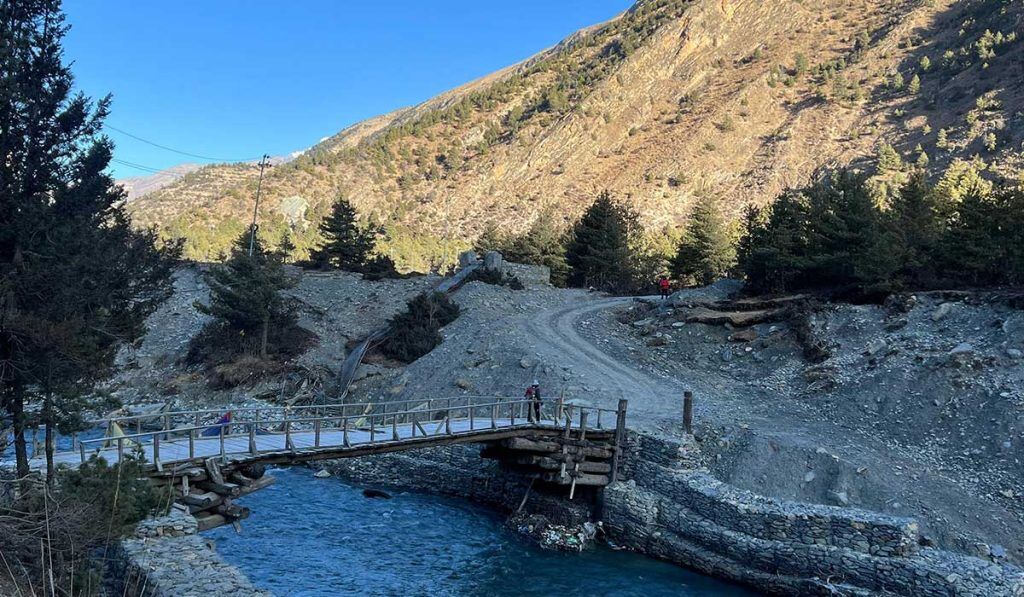
With the development of roads bringing transport access to these regions, the Annapurna Circuit Trek is one that has changed enormously since we photographed it over the years. The road upgrades have replaced the backdrop of trekkers planning their Himalaya expeditions, bringing new opportunities for flexible travel routes, shorter trekking durations, and easier access to remote areas.
The Annapurna Circuit Trek, once considered the longest, most beautiful, and most challenging trail in Nepal, has lost some of its magic due to modern road networks, but despite this, the iconic scenery, cultural interaction, and trekking experience are still liked by many. Understanding how road construction impacts the Annapurna Circuit Trek allows trekkers to plan a balanced itinerary that maximizes comfort and convenience while maximizing quality Himalayan travel.
If you’re sharing the Annapurna Circuit, you may want to know; read for peace and love!
The Annapurna Circuit trek map is getting altered as road building has encroached upon some sections of the path linking the locations between Nayapul and Thorong La. Many ground stages within the trek path at present are accessed through fixed roads to permit treks, which can reduce that traveling distance on foot when they stop in a few medium- to high-up towns. Anyone looking to the Annapurna region but with limited time can still see the highlights, as now it is easier than ever to travel around with bus connections 7/8 times a day rather than once or twice.
However, Thorong La goes, as you work the travel, which keeps on giving up at trekking, rouses scenery, and builds cultural trails that make this region still one of the finest methods for experiencing Nepal. Trekking highlights must last. Continue to remain in aspects such as high mountain scenery, cultural villages, and the ideal for those who read for more ways to experience a holiday.
Choose the Right Trekking Style
Road improvement provides new possibilities for trekkers for planning their Annapurna Circuit Trek itinerary. The program can be completed in several different phases; more traditional walkers are not willing to set foot on any bitumen-covered road or are only doing a short version with transport used on these sections of the route. Adventure-seeking walkers will still take tacwalkers, aging walking days through glorious mountain scenery, whilst time-pressed visitors can shape some personalised trips visiting some of the most scenic sections along the trail. Choosing the route of trekking is based on your interests—what you want to do, how much spare time you have, your capability level, and whether or not that requires significantly more comfort in a way or hiking experience.
Decide the Best Starting Point
Enhancements to the path have also opened up a wider range of options at the start of the Annapurna Circuit Trek. And transportation to those stretches has become better so trekkers can start the trek wherever they want. Most of the travelers at present launch from areas that permit higher access to the best, most scenically interesting portions of the path. To begin with, what one chooses as the starting point can influence main aspects such as the duration of the trekking or acclimatization process, in addition to impacting the overall experience. Strategically planned trips give just enough time to acclimatize while making sure you get to see all the highlights that this part of Annapurna has to offer.
Plan strategically for the most memorable trekking moments
Previous parts of this trek are tricky yet highly enjoyable walks, even with expeditious roads there now. The upper Marsyangdi Valley and the approach to Thorong La Pass are still some of the most beautiful high Himalayan landscapes and treks in the world. The Annapurna circuit was rigidly focused on panoramic views of higher-mountain snow peaks and passing through quaint villages, monasteries, and stunning landscapes across ridgelines. Trekkers should walk most effectively and save the keep-in-the-memory walking-most exercise paragraphs unless you happen to want to shut off your walk of trades if possible.
Consider Acclimatization Requirements
Road access excludes some sections of the Annapurna Circuit Trek, but altitude training remains crucial. The Thorong La Pass on the way has an altitude of nearly 5,416 meters, at which a fast gain of height can cause severe physical ailments. Do not progress too fast with transport and allow your body to adjust. A well-planned itinerary allows you to climb slowly, with plenty of days scheduled for rest in key zones (like Manang, where specific areas can be visited, e.g., Burang) with plenty of time to recover from the high-altitude acclimatization. Ignoring proper acclimatization, no amount of transportation enhancement will make your trekking experience easy and enjoyable.
Decide the Best Trekking Season
It is also still best trekked in the spring and autumn seasons, although road construction has made traversal easier than in days past for such trips, e.g., on the Annapurna Circuit Trek. Spring, with its pleasant weather, green fields, and bright blue skies to see the mountains; autumn, because the climate is stable after the monsoon and it makes for excellent visibility.
Though winter trekking is absolutely manageable, it requires you to gear up to face severe cold and snow closer to Thorong La Pass. During monsoon season things take a little more troublesome turn with constant rainfalls, muddy trails, and low visibility in mountains. Choosing the right season makes your hike safer, more comfortable, and enjoyable altogether.
Prepare for Changing Trail Conditions
Now, I’m not saying that the advent of modern road construction means you should skimp on your preparation for trekking. The difficult sections that also include steep climbs, altitude, and unpredictable mountain weather are still part of the Annapurna Circuit Trek. Hikers should prepare for the elements, have good-quality hiking shoes, have navigational assistance, and have more critical high-altitude gear. Understanding that road accessibility and trekking conditions can alter along the way will keep travelers on their toes throughout the journey. Daily itineraries remain flexible, depending partly on most weather and environmental conditions (perhaps transport), etc.
Focus on Cultural Experiences
Roads have changed parts of the Annapurna Circuit Trek over the years―but some of its best highlights are journeys away from the trek. Covering a diversity of communities, from Gurung and Manangi to the Thakalis—characteristically different by culture, architecture, and lifestyle. Moreover, tourists must visit a few monasteries and interact with the locals to experience the legendary hospitality of this part of the Himalayas. Taking slower methods of travel in culturally rich areas allows trekkers to gain the full benefits from many experiences that cannot be gained within a vehicle.
Travel Responsibly After Infrastructure Development
The Annapurna Zone conveys opportunity and challenge in regard to street uplifting. Obviously, expanded availability is similarly sure such improvement can support locally based enterprises through tourism and transport upgrades, yet visiting these locales ought to be endorsed with ecological protection alongside customary culture. How do you ensure that trekkers have responsible tourism in this area?
But do support local businesses, keep litter to a minimum, respect the traditions of the village, and follow conservation guidelines as best you can. These sustainable trekking practices support the natural beauty and cultural identity of the Annapurna Circuit, enabling communities to achieve their economic development potential without tourism growing in disruptive and environmentally harmful ways.
Best Annapurna Circuit Trekking Itinerary
Best Annapurna Circuit Trek Itinerary, A Good Compromise Between Comfort And Adventure With Culture After Road Improvements What parts of the circuit should the traveller trek, where they need to spend more time, and how much acclimatisation? ascendancy they can bring along. To complete your itinerary of Himalayan experiences covering top notches like Manang, Yak Kharka, Thorong La Pass, Muktinath, and Jomsom. The flexibility of the itinerary, as it leaves room for enjoying having access to the most scenic points and adapting to changing conditions either in trails or local transport.
Conclusion
Direct access to the Annapurna Circuit Trek just after road completion will add this additional layer of exploration: striking that balance between modern transport accessibility and the authentic Himalayan trekking vibe. On better roads, more choices mean less effort, but—illustrated here on the cover of the trek manual, which governs most conversations about the Annapurna Circuit—its mountains, cultures, landscapes, and high-altitude challenges are the reason to visit.
To organize a remarkable Annapurna adventure, visitors need to select the optimal route of courses that ensures time for adjustment or acclimatization on both sides of the Himalayas, focus on beautiful trekking sections, and travel with consciousness. If you are a traditional trekker or just a traveler who seeks the new frontiers of the Himalayas, there are few trekking adventures in Nepal that will provide a more satisfying endeavor than the Annapurna Circuit Trek.